Q&A: Dominic Hamdy
The restaurateur behind Kismet on his formative years as a Borough trader, the food culture of Northern Cyprus, and the emotional power of a great restaurant
“YOU WALK THROUGH THE CURTAIN, AND YOU’RE TAKEN INTO ANOTHER WORLD, AWAY FROM YOUR DAILY LIFE”
Interview: Mark Riddaway / Images: Jasper Fry, Kismet
“It came out of nowhere really,” says Dominic Hamdy, the restaurateur behind Kismet. “It wasn’t planned.”
He’s talking about Scotchtails, the market stall he co-founded straight from university with a surfeit of enthusiasm and minimal forethought. But the same could be said for every step of his subsequent journey through the London food scene. Ambition and invention, uninhibited by any kind of masterplan.
In 2013, that first bolt of youthful inspiration brought Dom to Borough Market, where for several years his Scotchtails stall in the Green Market served up handmade scotch eggs, fresh from the fryer. His experiences here helped lay the foundations for a move into the restaurant business and the creation of a steadily growing stable of buzzy destinations: Crispin in Spitalfields, two further outposts in Clapham and Soho, Bistro Freddie in Shoreditch, Canal in Westbourne Grove.
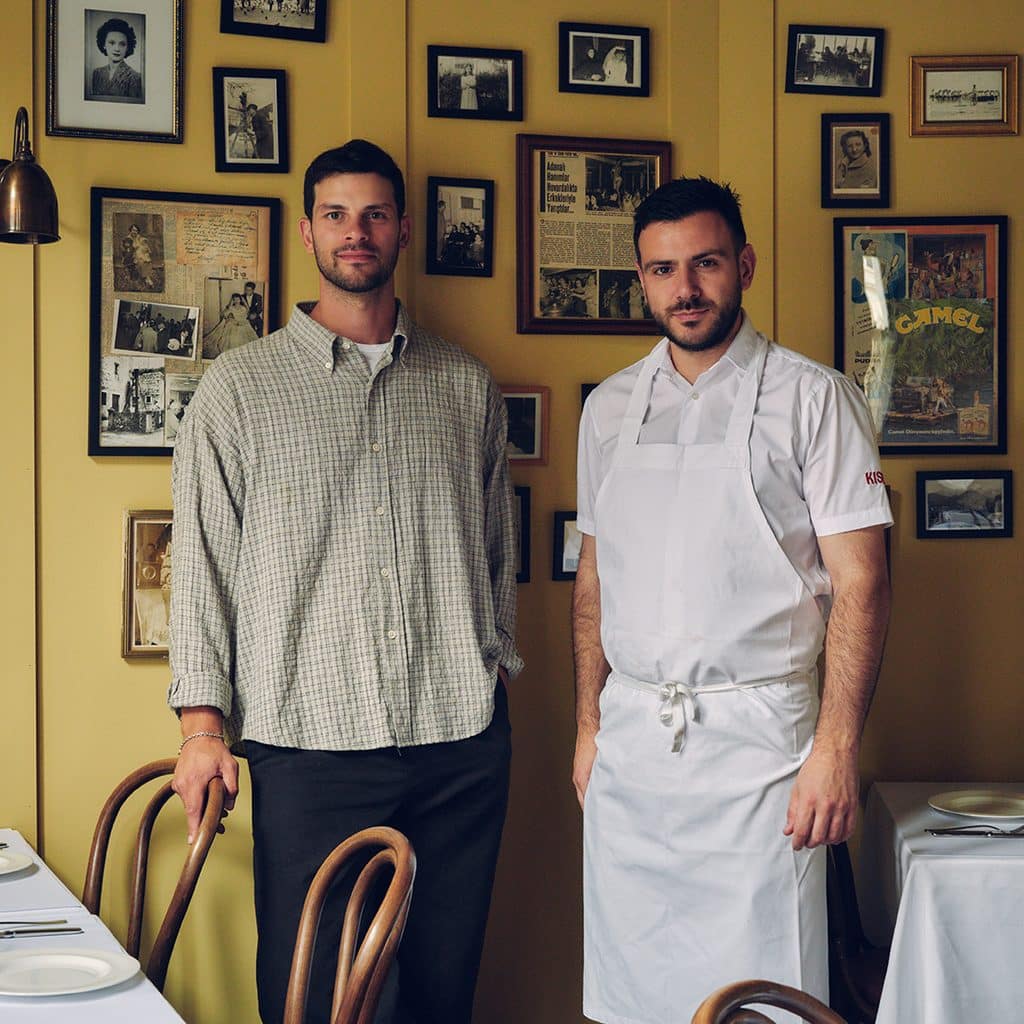
Kismet returns him to his roots, to the top floor of The Globe Tavern, within an egg’s throw of his former pitch. For this latest venture, Dom has joined forces with a chef who boasts a rich Borough Market pedigree of his own: Keiran Mustafa, who consulted on the launches of both OMA and Rambutan.
What are your abiding memories of your time as a Borough Market trader?
We arrived here in the winter. It must have been 2013. At first, we were in a big open space at the back of the market. We had a terrible few months, but then they moved us to the Green Market, between Kappacasein and the salt beef guys, and it just completely kicked off. It was insanely busy.
It was an exciting time for us. It was great fun, being part of a market, part of a community of traders. It was amazing in the summer when the sun was shining and it was hard and gritty in the winter when it was five degrees, the rain was coming sideways and you were setting up in the dark. In those days, there was no cover really. You look at the market now and it seems luxurious by comparison. Pampered!
What was your approach to the humble scotch egg?
A scotch egg is the sum of not many parts, so we were very focused on produce. We were buying Ginger Pig sausage meat and Clarence Court eggs. They were all handmade, cooked fresh and served warm, still soft in the middle. When you bought one, we would cut it open in front of you. There was something quite theatrical about it – this building of anticipation before the molten yolk came out.
How did you transition from selling scotch eggs to running restaurants?
Not consciously. It was just one foot in front of the other, doing slightly more ambitious things. Scotchtails was going very well, but it was almost at capacity. It’s not like brewing, where you can buy a bigger tank and produce more without compromising the quality. We wanted to make them all by hand, much like the köfta here actually at Kismet, and it couldn’t really scale up. So we branched out. Specialty coffee had arrived in London and was really booming, so we found an old sandwich bar on Aldwych, renovated it and created a Scandinavian-inspired coffee shop. Then we found a second site, which is now Crispin. We intended it to be another coffee shop, but we ended up hiring a chef, getting an alcohol license and turning it into a restaurant, kind of out of nowhere. That was where this all started. We began the lifelong challenge of trying to figure out what makes a good restaurant and how best to run it.
How did you come across Keiran?
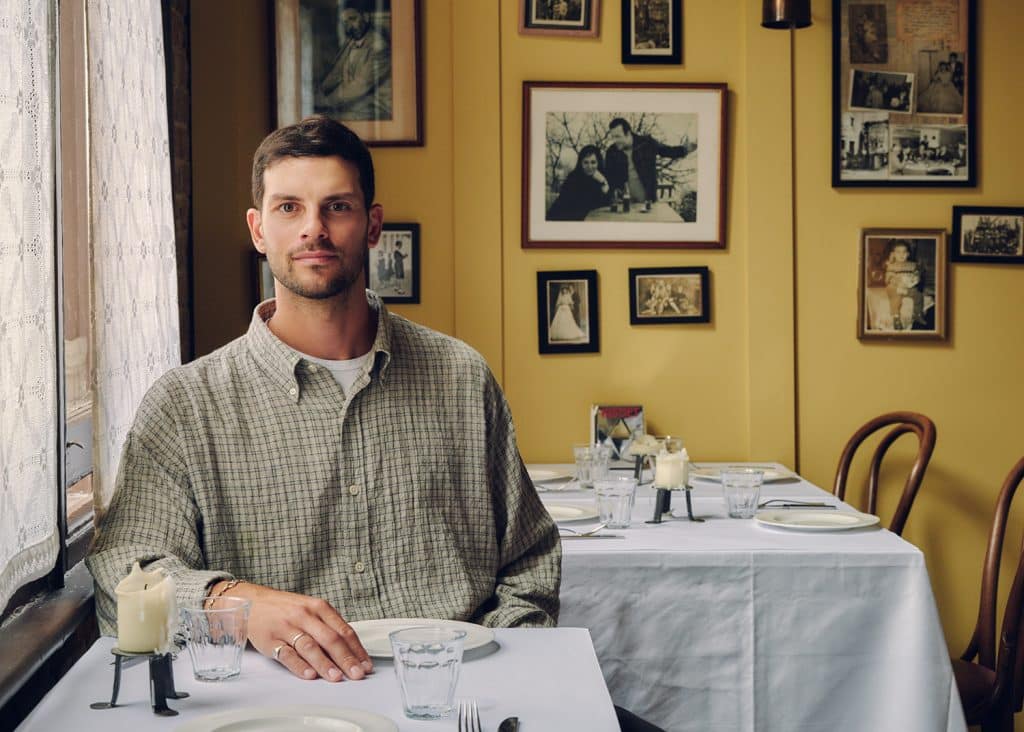
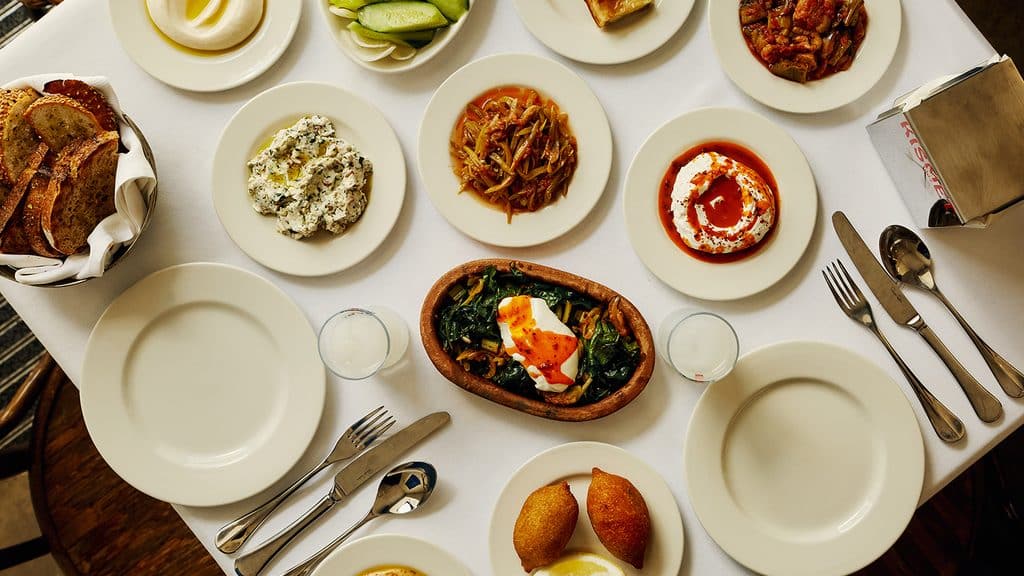
Keiran was helping us at Canal and at Bistro Freddie, doing a bit of consulting, and we started talking about what he wanted to do with his life. This was his concept – Kismet is the food culture of Keiran’s heritage. It’s food that he’s been eating and cooking since he was a little boy. Many of the pictures on the walls are his family photos. It’s a very personal project and I think that really comes through in the food. He’s a brilliant, brilliant chef, and this is something he cares about deeply.
How would you sum up the restaurant’s concept?
It’s inspired by the meyhanes of Northern Cyprus and Istanbul. In that part of the world, a meyhane is the equivalent to what the pub is in the UK – a place where people come to eat, drink and be merry. They’re like community hubs – familiar, welcoming, convivial. Keiran and I worked on the idea together for the best part of nine months before finding this spot. We spent time in Northern Cyprus and Istanbul so I could start to properly understand it. Northern Cypriot cuisine has some unique nuances, from the geography, the produce, the culture. And it means a lot to them. I’m still understanding those nuances, but they’re very clear to Keiran!
Given the parallels, did you set out to find a space above a pub, or was it pure chance that you ended up in one?
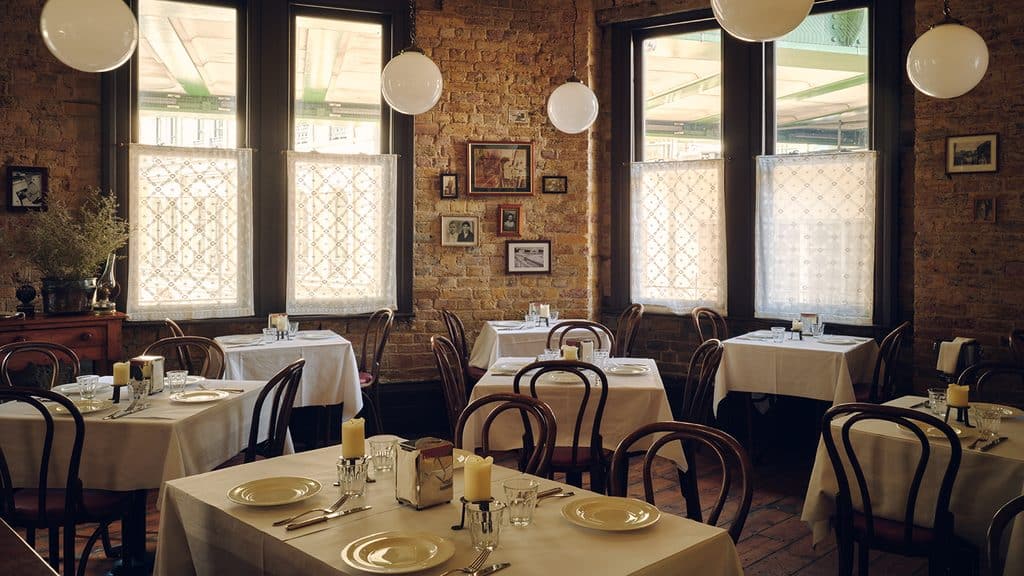
Absolute luck. We didn’t necessarily know that the right home for Kismet was on the first floor of an old pub, but it genuinely feels like kismet – a word that means ‘fated’. It’s perfect. People keep telling me that feels like this place has existed forever. At our restaurants, our aim is always to transport people. Here, you walk through the curtain, and you’re taken into another world, away from your daily life. It doesn’t feel like you’re in Borough Market, it doesn’t feel like you’re above a pub, it feels like you’re in Cyprus or Istanbul. There’s a bit of theatre in our restaurants in the same way there used to be theatre in me cutting open a scotch egg so you could see the yolk run. It’s central to what we do.
What have you done to the space at Kismet to create that sense of theatre?
Every aspect is a very considered. Everything from the sound – we call it the ‘sonic identity’ – to the lighting, to the colour palette, to the thickness of the paper, to the typefaces we use. All of it is designed to carry you off to a different place and a different time. We go to quite extreme lengths. Initially, the cafe curtains weren’t quite the right shade of white, even though they’re vintage, so we had the curtain maker stain them with tea in her garden. Each light is individually dimmable, and we’re constantly adjusting them. All these tiny details add up.
What kind of response have you had from the Northern Cypriot diaspora?
Keiran said to me very early on that the goal is for someone to come here and be transported; to eat a bulgur köfta and for it to bring a tear to their eye because it reminds them so much of home. And that’s happened here so many times. Actual tears. That’s because it’s not a neo-Turkish restaurant. It’s not a modern interpretation. It’s very, very true to Northern Cypriot food and culture.
Is there anything you learnt from your experience as a trader that you’ve carried with you into your restaurants?
When we started in Borough, it immediately exposed us to amazing produce. Seeing it come in every day, knowing who was growing it and who was selling it. There’s always been that same connection at our restaurants – we know the people who grow the vegetables, catch the fish, look after the cattle and produce the meat. We have the same suppliers across the business, and we’ve got great relationships with them all. The food you taste is totally related to how the ingredients were produced. That will always be the case.